Practicing

Expert Advice from Itzhak Perlman

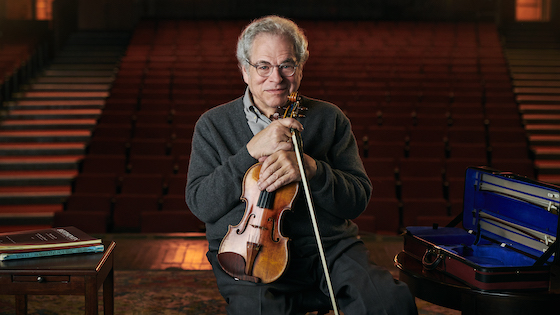
Undeniably the reigning virtuoso of the violin, Itzhak Perlman enjoys superstar status rarely afforded a classical musician. Beloved for his charm and humanity as well as his talent, he is treasured by audiences throughout the world who respond not only to his remarkable artistry, but also to the irrepressible joy of making music, which he communicates. (Taken from his biography from https://itzhakperlman.com/)

He said in an Instagram post:

“When you practice it has to be slow. You cannot practice impatiently. You know, putting in the time of practicing is not enough. I would rather you practice with your head for two hours and somebody else just mindlessly for eight because that doesn’t work. So I can tell you if you want to practice really correctly, Number 1: SLOWLY.

Number 2: HAVE AN AGENDA. Why do you want to practice? You know, make sure that you practice in small sections. You want to make sure that you don’t repeat anything without actually hearing what you’re doing because when you repeat certain things and for example let’s say that you practice something for the bow and you keep repeating it and you’re playing it slightly out of tune then you are actually practicing to play out or tune. That’s why you have to listen really carefully to what you’re doing and so on so I know that this is very, very general but at least the important thing is to do it very slowly and to do it in small sections and to have patience. If something sounds great on Monday and it does not sound so good on Tuesday don’t give up. It means that it’s not yet there. Keep practicing slowly again and again and by Wednesday it will be slightly better and by Thursday it will be even more better but patience is very, very important.”
Flute, Practicing

Practice Makes Progess

Perfectionism vs. Progress

Perfectionism is a terrible disease. I suffer from it as I know many others do. Especially as a flute player or musician or artist, perfectionism can be helpful or it can be detrimental. Yes, we should always strive to have all the correct notes, correct rhythms, correct dynamics, breaths, style, interpretation, vibrato, tone colors, phrasing, etc.

Can you see why perfectionism is an ongoing struggle?

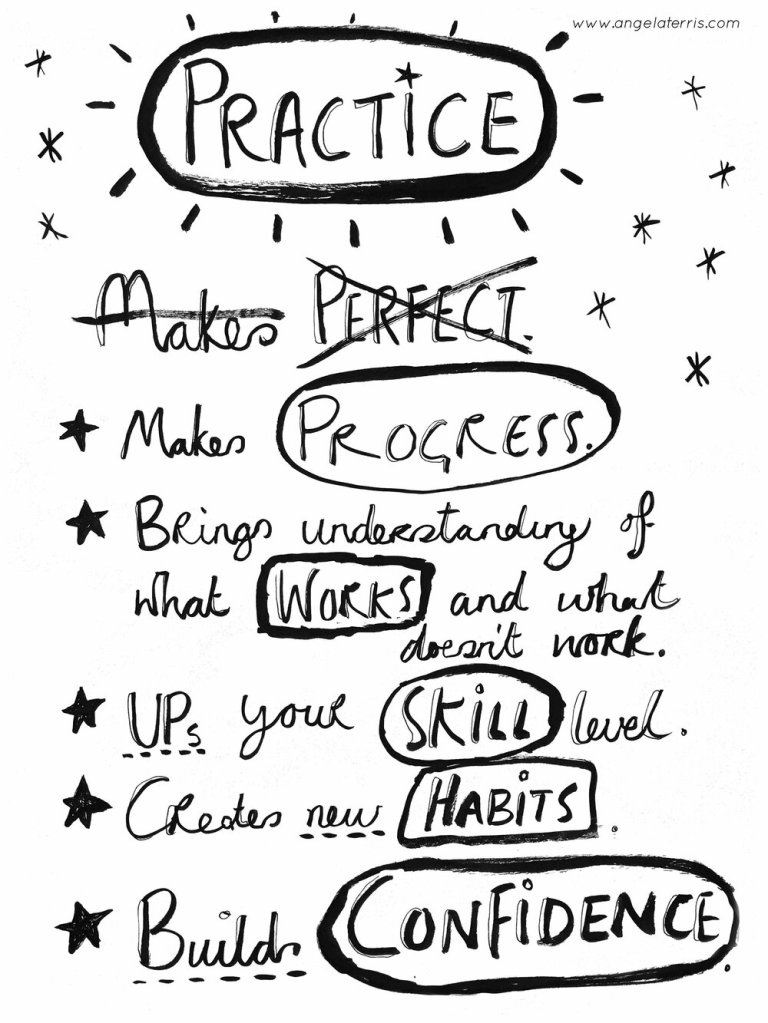
In music and in sports, you often hear the phrase Practice makes Perfect. I prefer to use the phrase Practice makes Progress. Here I thought I was so brilliant in coming up with this, but when searching for a photo to use, I found that I wasn’t as brilliant as I thought I was – haha.

The picture above says it all. If you don’t practice, you can’t expect progress.

Practicing is a developmental process to learn what methods are helpful to you. As a teacher I can attest that every student is different. What works for some doesn’t always work for others. That’s one of the things that makes teaching so fun. Finding and creating new ways to affectively teach each music student.

If you want to become a better flute player – or better at anything for that matter – you have to spend time working on that skill.

The more you practice, the better your flute playing habits will be whether those are good habits or bad habits. Hence the need for a private flute teacher to ensure you are practicing good habits.

The more you practice, the more confidence you can achieve with your tone, scales, songs and flute playing. It’s fun to really know a piece well and be confident with it, especially when preparing for a performance. That is impossible to achieve unless you are practicing smart. (That will be another post for another day.)

The main point is this: If you expect to improve as a flute player or anything else in life, you should practice consistently and regularly. That’s all there is to it.

“Practice makes Perfect Progress”.

Flute

Summer Practicing

Hooray for Summer! Who doesn’t love a change of pace, the warm summer sun, lemonade, swimming pools, ice cream and vacations?

With all the fun and extra events that summer brings, how do you stay motivated to practice during the summer? Commit to keep playing, especially if you are not taking lessons during the summer.

Sight read anything. Pull out old books you’ve previously gone through, flip randomly to a page and see what you can still play.

Go to flutetunes.com and try the Tune of the Day. They have an audio recording along with it.

Summer can be a great time to strengthen your scales and put them to memory.

Play popular music or folk tunes. All local music stores always have popular music or Broadway or Disney music favorites or Irish tunes or folk songs for flute. Try a new one each day as you continue to work on proper breaths, accurate tonguing, solid tone and vibrato.

If you find it hard to motivate yourself to practice, at the very least, listen to exceptional flute players. Maybe that will motivate you to practice.

In any case, enjoy summer and keep music a part of it in some way.