We are eleven days into the new year. What have you done differently these past eleven days? Have you made a long list of goals or does that just discourage you? Resolutions are great but also hard to keep, especially if you are over zealous with your goals. I hear that January is the busiest time at the gym with everyone and their new goals, but then gradually attendance tapers off as people give up on their goals.
A new year seems to be more of a fresh start for many people. Although, in reality, each day should be a fresh start for all of us. A new day is a new opportunity to accept who we are yet view the fresh possibilities that lie before us for the next 24 hours.
How will YOU use this new day? How will YOU use this new year?
My advice is to start small. Goals don’t have to be monumental. Perhaps your goal today is simply to smile just a little more than you did yesterday. Maybe your goal is to be a little kinder or more forgiving. Or maybe your goal really is to exercise more. Whatever it is, start small.
Now in terms of flute practicing, again, my advice is to start small. Perhaps your goal is to practice for 5 more minutes. Maybe your goal is to listen to your tone instead of going through the motions. Or your goal could be to memorize one more measure of your song. Whatever you choose, make some kind of goal when you get your flute out and don’t just go through the motions.
And, also as with life, don’t just go through the motions. Live each day. Try a little harder and if you don’t achieve your goal, remember that tomorrow will be a new day.
Summer is known for extra activities like fun trips, vacations, camps, family reunions, carnivals and more. Sometimes it can be hard to practice your flute when your time is competing with so many events on your calendar.
That’s why an extra CONGRATULATIONS goes out to my flute and piano students who earned a summer practice treat. Way to go! Enjoy the end of summer and we’ll have some more fun and get back to work after school starts.
It’s already February! Where did January go? Does anyone else besides me feel like time flies? I had a riddle book growing up that I loved to read over and over. Here’s a riddle for you from that book.
HOW DO YOU MAKE TIME FLY?
The answer will be at the end of this post… Keep reading.
With the new year beginning (last month), did you set any new goals? As a music teacher, the new year is a great time to encourage students (again) to increase their practicing efforts.
“Did you practice?” That’s what every kid wants to hear from their parent or teacher, right? Haha.
First of all, your teacher can tell if you practiced or not, you don’t really have to say anything. They’ll already know if you practiced. Trust me, they’ll know.
Do you ever think to yourself, “Oh, I have all week to practice. I’ll go do something else right now.” Then all of the sudden you realize that your lesson is TOMORROW right after school and you haven’t practiced at all! Panic! Don’t tell anyone, but I’ll admit – I did that when I first started taking flute lessons. However, over time I learned to love the flute more and more and practicing became fun instead of a chore. Now when I sit down to practice, I enjoy it so much that when I finish and look at the clock, I didn’t realize how much time had passed. That’s when practicing is fun.
You don’t feel that way, yet? I understand. When it comes to practicing, follow the Nike slogan. Just Do It. Half the battle is simply getting your flute out of the case or sitting down at the piano and getting your books out. Don’t argue with your parent for 30 minutes, just go practice for 30 minutes instead.
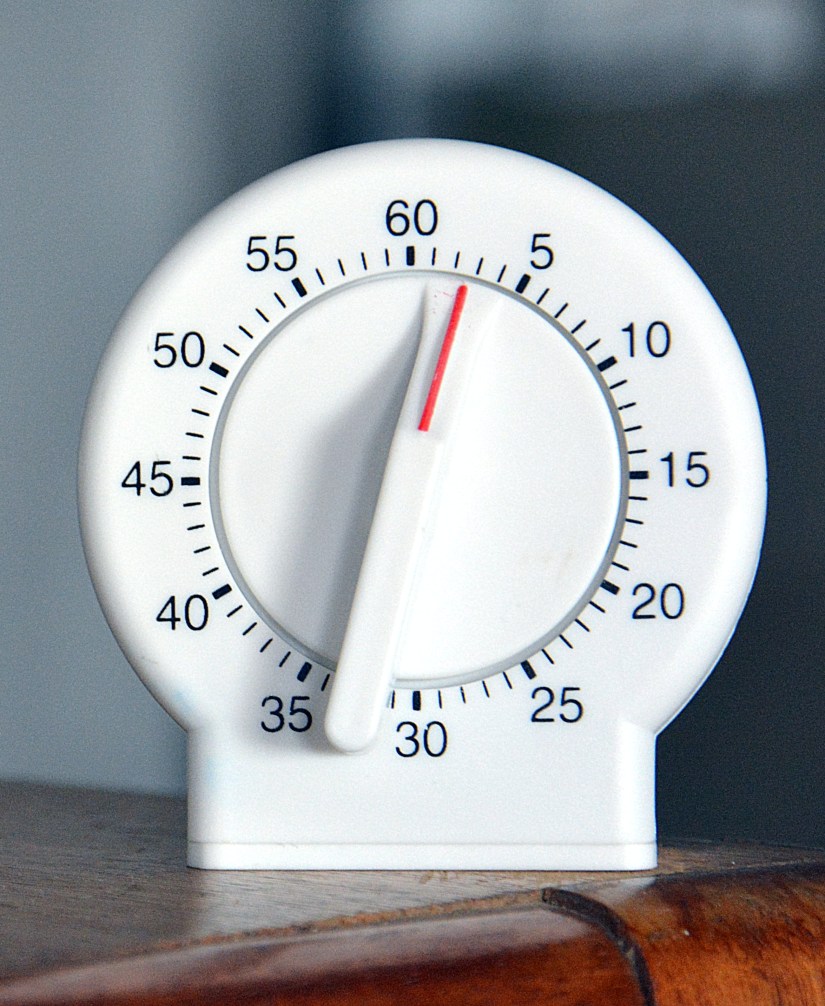
When my children were younger, they each had their own kitchen timer to keep track of their 30 minutes of practicing. Kids didn’t have smartphones back then. The timers helped them see how much time had passed and how much time they had left.
A word to the wise about setting practice timers. Be careful how you do it. Someone shared a story of how their daughter wanted to go play with firends, but knew she had to complete her practicing first.
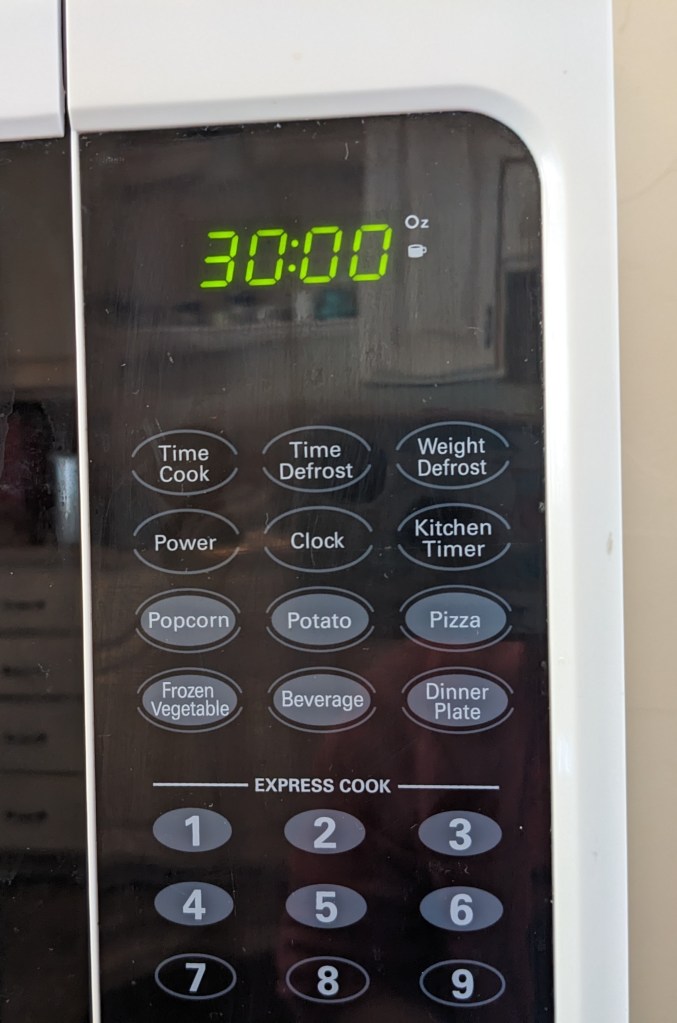
She thought she set the microwave timer to 30 minutes and went to go practice the piano. But, she didn’t set the timer button, she pressed the cook button instead!! After practicing about 20 minutes she went into the kitchen to see how much time was left. What did she find? The microwave was on fire!!
In her dad’s words (Kelly R. Johnson), this is what happened next, “She then ran into the backyard where I was doing yard work, yelling that the house was on fire. I quickly ran into the house, and indeed, I found the microwave oven in flames. In an effort to save our home from burning, I reached behind the microwave, unplugged it, and used the power cord to lift the burning microwave off of the counter. Hoping to be the hero and to save the day as well as our home, I swung the flaming microwave in circles with the power cord to keep it away from my body, got to the backyard, and with another swinging motion flung the microwave out onto the lawn. There we were able to extinguish the fiery flames with a hose.”
Now, this is probably an extreme story of a practice timer gone awry. But if it helps, I encourage you to set a timer.
The more you practice, the sooner you will improve. It’s that simple. The more you practice, the easier it gets to be motiviated to do it.
The riddle I shared? HOW DO YOU MAKE TIME FLY? Answer: THROW YOUR CLOCK OUT THE WINDOW. Well, I obviously wouldn’t recommend throwing your flute out the window, and hopefully, you won’t have a need to throw a burning microwave out the door. My point is, that the more you practice and get into a regular routine of practicing, the easier it will become and you’ll find that time flies when you are having fun.
Do you know someone who is always cheerful? Someone who sees the glass half full? Always positive? Hopeful? Bright? Encouraging? Upbeat? Looks at life through rose-colored glasses?
Our world has far too much pessimism. I’ll admit that sometimes it’s easier to see all the problems that surround us in our neighborhood, our community, our country and the world or in ourselves. But it certainly doesn’t contribute to a happy life if you are always a negative person. Do you like being around people who are negative? Don’t be that person. We need more people who are optimistic.
When it comes to flute practicing and performing (or any other endeavor for that matter), it is critical to stay positive and encouraging to yourself. Find the good things you are accomplishing through practicing or performing.
For example, don’t get frustrated if you can’t get a passage after a 10 minute practice session or an hour practice session. Some things take time and some things take a lot more time than you think to get to the level you desire. Be patient and stay positive and keep trying. Look back on how much you have learned in the past. Rejoice in small accomplishments. Be nice to yourself.
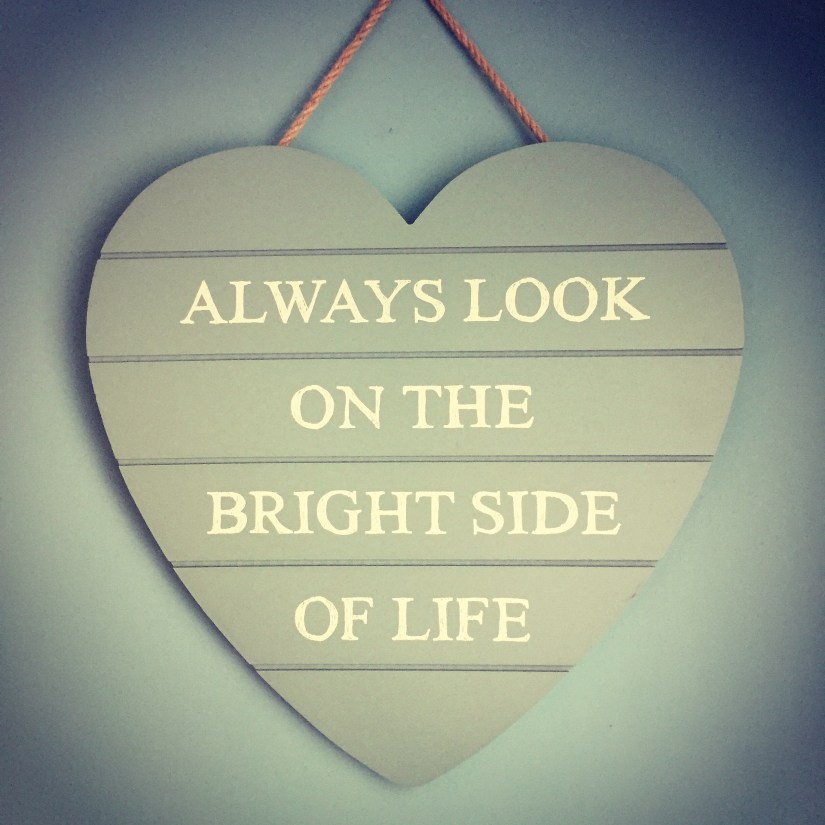
I promise that your life will be much happier and you will be more successful if you can learn to look on the bright side. I’m sure you’ve heard the expression “the power of positive thinking”. Optimism is a conduit for power. You can Google a million quotes about being positive.
Are you familiar with the term “Pollyanna-ish”? If not, go watch the 1960 movie Pollyanna with Hayley Mills, which is based off the 1913 novel. It’s an excellent story about an orphan who truly knows how to look on the bright side of life.
I have a tile plaque in my living room which provides a daily reminder to…
THINK positive.
DO positive.
BE positive.
STAY positive.
ACT positive.
FEEL positive.
I challenge you to Be Positive for at least one day and discover how your life can change for the better.
C’mon. You know you love it. It’s January and time for those yearly goals of exercising, eating better, and practicing your flute more. Many have heard of SMART goals. Specific, Measurable, Achievable, Realistic, Timely. Using SMART tools has proven to be successful in achieving goals.
Let’s look at an example. GOAL: I want to get better at playing the flute. What’s the problem with this? Too broad, not specific, doesn’t state how to measure progress or why it’s important, nor does it specify a time goal with it.




 Lynette Lewis Flute Studio