Performing

Just Play

The Joy of Performing

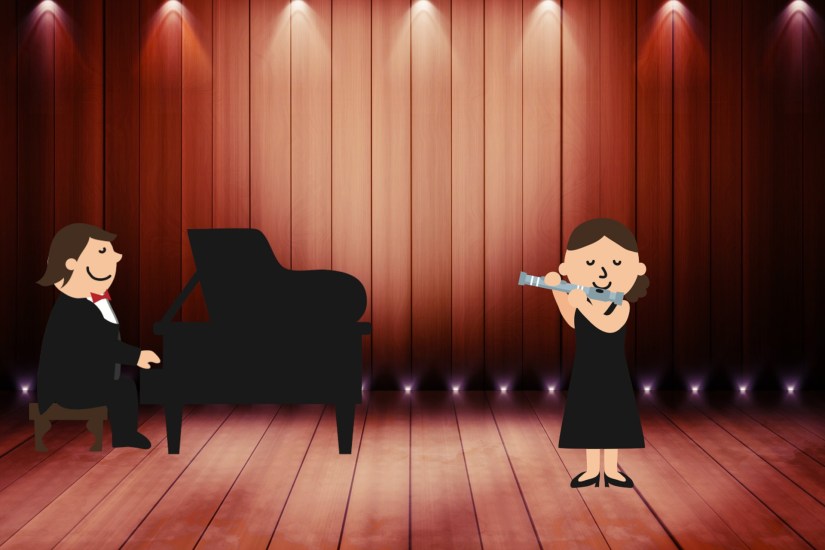
How do you get over the fear of playing your flute in front of others? Just do it. Play in front of others as often as you can. Yes, there are a bunch of performance preparation tips but this blog post is mostly about simply getting yourself in front of others.

As a teacher, I try to provide performing opportunities for my students on a regular basis. If you don’t take private lessons from someone who provides these types of opportunities, create your own. Volunteer to play in church, or for a social event, or at an assisted living center, or let your community choir director know you are available to play a flute obbligato if they need one.

When my children were younger (and at home more often), sometimes I’d bring them in the living room where I taught flute lessons and made them sit on the couch and be an audience for my students. Believe me, my kids were attending recitals and concerts as soon as I’d allow. They learned to be exceptional audience members from a very young age. If nothing else, set up your favorite teddy bear or pictures of others on your couch and have them be your fake audience.

When you are preparing for a bigger audition or performance, visualize the performance in your mind while you are practicing at home in your living room or bedroom, or wherever you practice. Imagine the setting you might be in. Then “practice performing” in your mind.

Then when you get to your performance, try visualizing your “comfort zone” of being in your living room or your bedroom or wherever you practice. Let that “comfort zone” help calm your nerves. Above all, don’t freak yourself out before you even get there. (Not that any of you would ever do that.) Yes, sometimes judges or a room full of audience members can be intimidating, but for the most part, I truly believe that they are there to support you and if a judge, help you improve and offer constructive criticism.

If you really want the practice before a critical performance or audition, play in front of others in 10 different settings. That’s right, T-E-N, 10 different settings. Ask your neighbors, friends, aunts, uncles, grandparents, friends of friends, anyone. Tell them you need to practice performing and ask if you can come play your pieces for them at THEIR house. This way you are in a different setting with different lighting and different acoustics and you can practice performing. I can’t imagine that people would turn you down. But if they do, who cares. Ask someone else. Performing gets easier with practice and with time as you gain more experience.

So play, and play, and play in front of others! Then play your flute some more!!

Flute

What Do I Love?

What do I love about playing the flute?

When I was young, the criteria in my family for choosing an instrument was that it had to be something acceptable to play in a sacred, religious church setting. Since my grandpa played violin, all of my siblings and I naturally started on the violin and I had several cousins who also played violin. I started violin in the 3rd grade. In 4th grade, the band program began in school and I started the flute.

I played the violin and the flute for a few years. I remembered how nicely the flute would fit in my yellow-gold backpack and how the violin was more cumbersome to take on the bus ride to school and I had to find a place at the back of the classroom to put my violin case everyday. I feel like the fact that my flute fit in my backpack easily was a contributing factor in why I stopped playing the violin and stayed with the flute.

I have many more reasons now for loving the flute. When I ask new students why they want to play the flute they frequently say, “I don’t know. I guess cuz’ it sounds pretty.” I agree. The flute does sound pretty.

I love the feeling of soaring when I play. Most people think the flute is a small, weak instrument. My flute professor, Dr. Ted Wight, would always tell me that the flutes can compete with the trumpets. He was the one that helped me develop my tone projection through support, air control, and opening my chamber cavities. Dr. Wight could get amazing volume on his flute and pushed me to learn how to do the same. We did this through MANY tone exercises. You can’t expect this to develop overnight.

I love the feeling of singing through my flute. I love to express music through how I play the flute. Marcel Moyse, famous French flutist, said that the flute is an extension of the voice. He has a wonderful book called Tone Development Through Interpretation which is mostly a collection of excerpts from operas. Like Marcel Moyse, I too had a parent that was a singer. Singing is a great art form to study to apply to flute playing.

I love the feeling of peace it brings. While I was in college, a friend of mine was killed in a head on collision involving a semi truck. I have vivid memories of the time after that. While practicing my flute in the small practice room on campus, I reflected on my relationship with my friend, the last time I saw him, and processed the change that had now taken place. I know I’ll see him again in heaven, but it felt strange to have someone my age have his life cut short so suddenly. Playing the flute during that healing process brought me peace.

I love the friendships it creates. It’s fun to play chamber music with others and share my talent. Some of my closest friends in high school and college came through being in music groups together – band, orchestra, and choir. In college, I had more opportunities to play lots of duets, trios, quartets, woodwind quintets, bands and orchestras. Even now, I have a circle of “music friends” as I call them. Still participating in orchestras and choirs, the music bond I create with people lasts forever. I love to run into old friends in the community or at flute conventions. That love of music binds us together forever.

Those feelings of soaring, singing, peace, and friendships are just a few of the reasons I love playing the flute. And yes, I still love how my flute fits into a small bag for traveling.

What do you love?

Flute

Silver Bullet Advice for the Developing Flute Player

The Power of a Straw

Last week I was a clinician for a flute sectional for a local Junior High Honor Band. The teacher that invited me to be the clinician asked me to take some time to address what is crucial for young musicians their age and experience level to know or to “share a silver bullet for correcting typical issues in young players.” Hence, the title and subject of this post.

What is a Silver Bullet? Merriam-Webster.com defines a silver bullet as “one that instantly solves a long-standing problem.” Dictionary.com defines it as “a quick solution to a difficult problem.”

Learning to master any instrument takes years of careful and thoughtful practice and instruction and experience. But, if I had only had 30 minutes to spend with you, this would be my advice.

Tone is the most important thing. Take the time necessary to develop a clear flute sound. Yes, this means you have to practice slow, long tones.

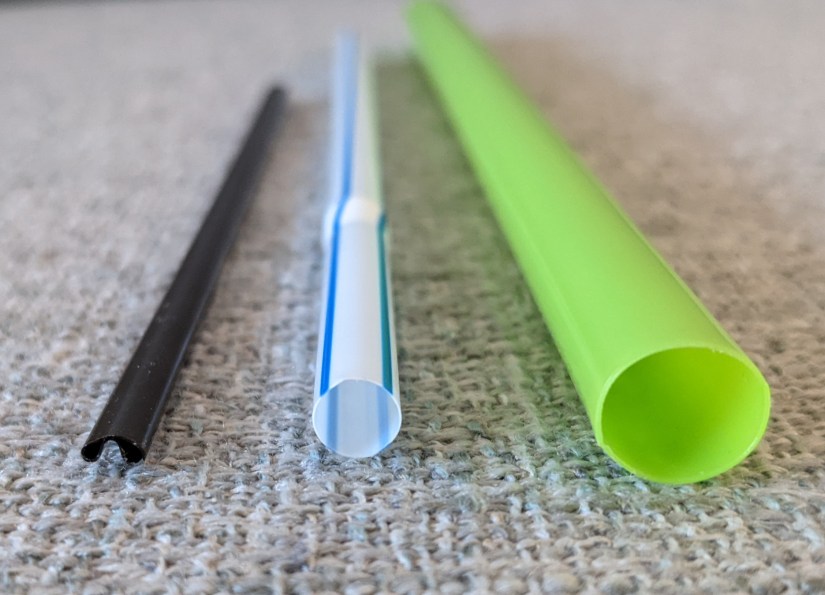
Use more (faster and effective) air. Practice blowing through a straw. When blowing through a straw, see how fast you can push all of your air through the straw.

A coffee straw, a regular drinking straw, and a larger specialty straw.

Try blowing through each one to gain the understanding of what kind of support you need to push your air through as fast as you can. Generally speaking, the regular sized straw is the most accurate type of straw to achieve the feeling of creating resistance as you exhale on the flute. Blowing through the coffee straw brings back college memories of taking oboe lessons one semester. Blowing through the specialty straw feels like blowing through a contrabass flute.

Straw practice is a good place to start, but I strongly suggest investing in a Pneumo Pro or Breath Builder. You can read my blog post from October 3rd, 2020 for more pictures and more information about the Pneumo Pro. Do an internet search for a Breath Builder and you’ll easily find one. Most younger players, and even older players that come to me for lessons, don’t use a fast enough airstream.

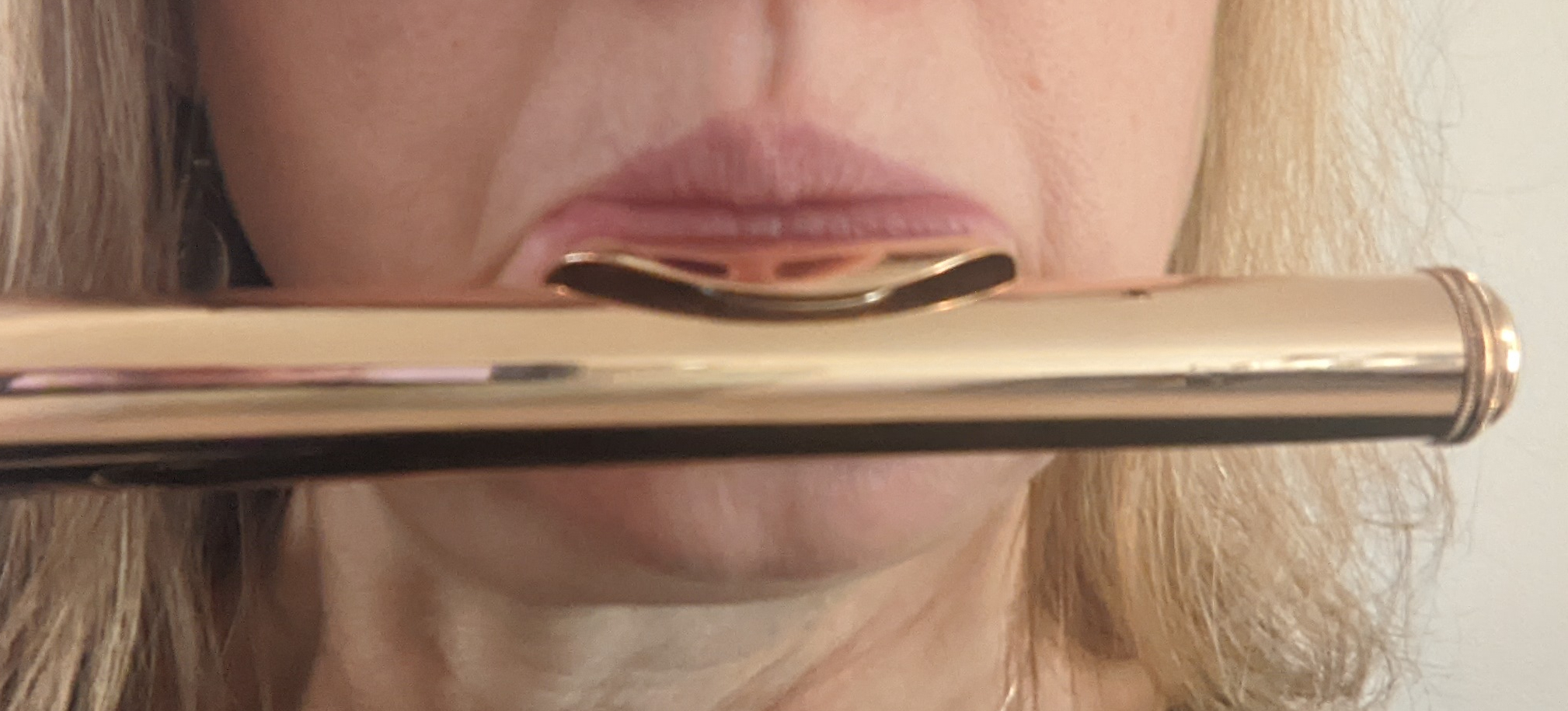
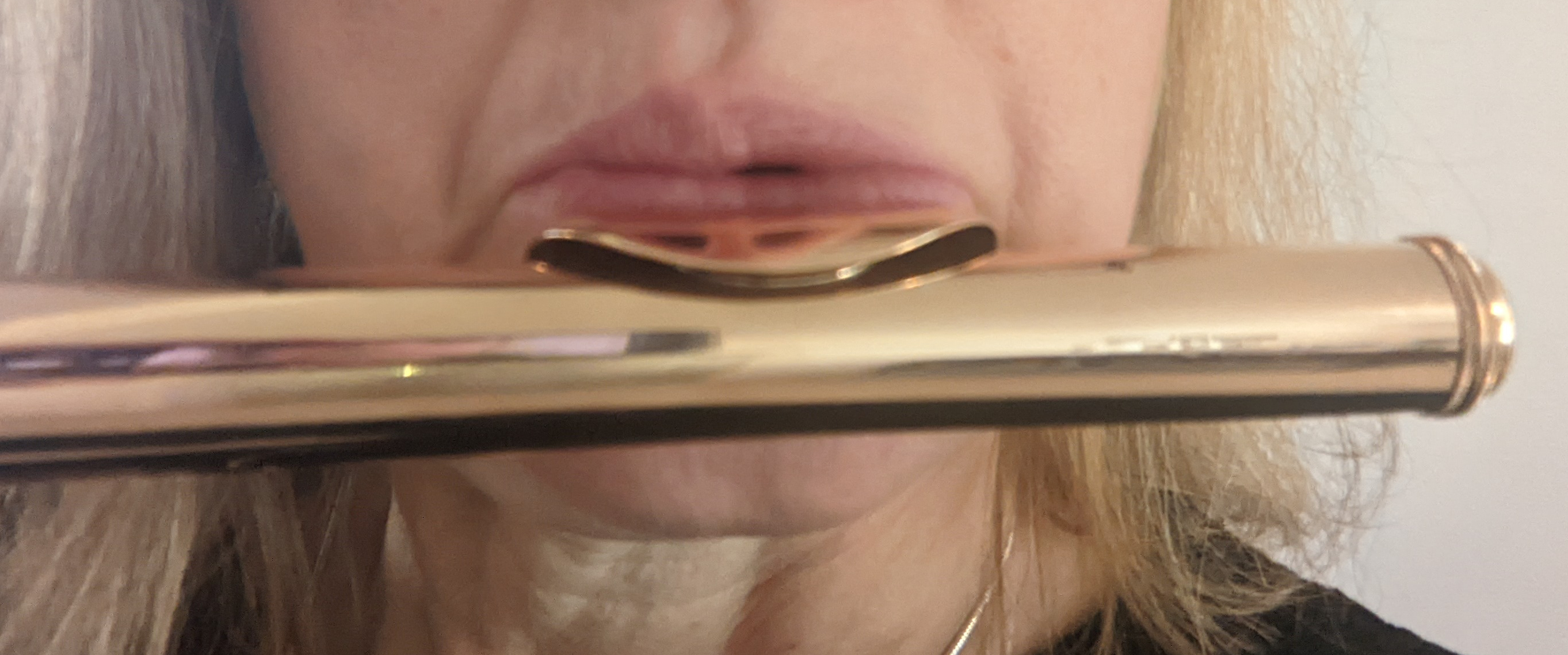
Pucker and Pout. Create a cushion for your flute with your lower lip.

This was just too cute to not share. She’s going to make a great flute player when she grows up.

Photo by Alexander Dummer on Unsplash

Pout, then pucker and blow while maintaining your pout. Blow into the flute more and aim down.

Keep your airstream steady and consistent. Practice long tones daily to develop this skill. Set your metronome to quarter note=60. Play a scale slowly in whole notes.  Challenge yourself to see how many whole notes you can play in one breath. Then advance to other tone exercises.

Continue reading “Silver Bullet Advice for the Developing Flute Player”
Flute

The Universal Gift of Music

When I was in college, I had the opportunity to travel overseas to Europe and Asia with performing groups. These trips were memorable and eye opening. Even though we couldn’t speak the same language, the universal language of music and a smile broke down any language barriers that existed through not being able to communicate through words.

Where words fail, music speaks.

I found this to be true back then and continues to be true today. A few weeks ago my family and I went to an assisted living facility to do a musical Christmas program for some of the residents in the memory care. Sharing a musical program to what used to be called “an old folk’s home” is a favorite tradition that I carried over to my family from when I was a child. My children have participated as soon as they are old enough to shake a jingle bell. This is one of the best parts of Christmas, sharing our gifts with others.

We provided a Christmas variety show with piano, flutes, alto flute, pan flutes, drums, tambourine, jingle bells, and singing. While some of the residents can’t communicate very well through words, due to health issues and loss of brain functions, the smiles on their faces said it all. We performed for nearly an hour and none of them became restless. They wished for more.

Why do we learn to play or sing music? Why to do spend so much time practicing to really master a skill? Why do we sacrifice so much time and effort and money (thanks moms and dads and grandparents)? It is for times such as these.

Music is that language that connects our hearts together in spite of race, religion, ethnicity, language, lack of brain function, or any other barrier. Music speaks from one soul to another soul. How blessed we are to have the universal gift of music!

Flute

Simple Advice for Christmas and Beyond

The Christmas tree advice is adapted from a message originally published in a magazine in 1959 by Howard W. Hunter. [This Christmas…]

Be kind.
Be gentle.
Apologize.
Write a letter.
Keep a promise.
Give a soft answer.
Forgive an enemy.
Welcome a stranger.
Express your gratitude.
Think first of someone else.
Seek out a forgotten friend.
Gladden the heart of a child.
Examine your demands on others.
Speak your love and then speak it again.
Manifest your loyalty in word and deed.
Dismiss suspicion and replace it with trust.
Take pleasure in the beauty and wonder of the earth.
Encourage Youth.
Forgo a grudge.
Mend a quarrel.
Try to understand.
Laugh a little more.

This advice still applies to each of us in 2021. As you begin 2022, may you find inner peace as you strive to be a little better in some small way. Happy Holidays and Best Wishes for a Joyous New Year!!