Gold Cups from the National Federation of Music Clubs
Last weekend we had our Federation Festival for the Timpanogos Area Flute Chapter. Congratulations to two of my students for earning a 15 point Gold Cup and a 30 point Gold Cup from the National Federation of Music Clubs!! That takes at least 3-6 years to earn. They’ve both worked hard to earn these. They’ll get their name engraved on the front of the base. Way to go!!
Frequently our hard work goes unnoticed. However, please remember that it is still valued, even if there is no immediate reward.
It is nice for these students to be recognized for all their time practicing and preparing for festivals for so many years.
In my most recent blog post I addressed Dynamics. Here’s the other half of the equation – Intonation, which is learning to play in tune. This is intended for the flute student that is new to learning about intonation.
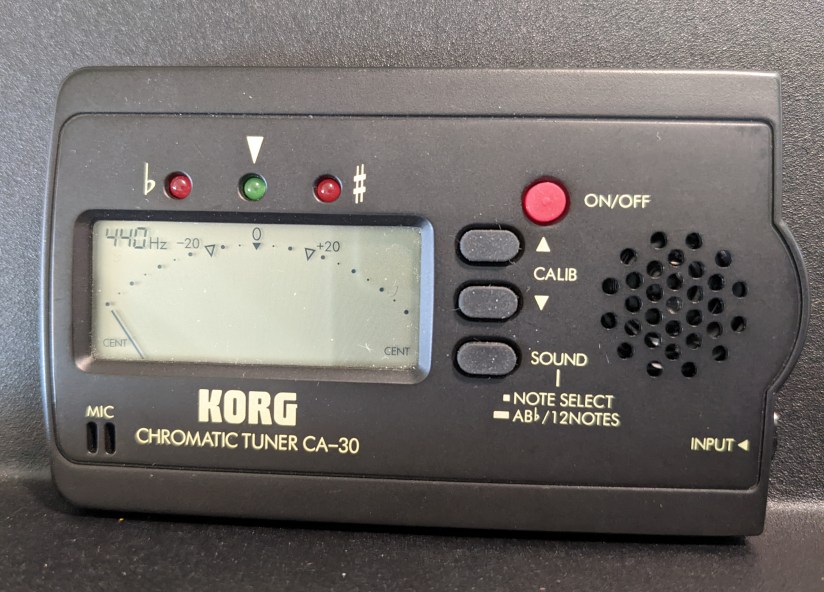
Start by getting a tuner or tuner app. Turn it on and calibrate it to A=440. Tune your middle and lower register As and middle D. The goal is to have the needle vertical so the green light is on. Remember to play with a consistent air stream for each note. If your air is different, for example, playing soft for one tuning note and loud for another, you won’t match the intonation with the different octaves.
If you are sharp, meaning it is leaning towards the right, then pull your headjoint out a little. Here’s a way to remember. If you step on a tack – or a pin, it is sharp and you want to pull it out. (Do people even use thumb tacks anymore??) If you are flat, meaning it is leaning towards the left, then it’s the opposite, push your headjoint in slightly.
Next, practice harmonics. Finger a note in the low register, then overblow to get different pitches. You do this by changing the lip opening, air speed, and angle of the air.
Try this exercise. Play low G, middle G, then overblow to get the pitch high D. Then switch to the “true” high D fingering and try to keep the pitch the same. Play the
Dynamics = playing loud or soft, or somewhere in between
Intonation = the art of playing in tune
Changing the volume on a radio or headphones requires changing a button. It takes very little effort to make this change. However, as a flute player, it’s not that simple. Anyone can play one volume. Learning to play various volumes adds to the musicality of your phrases.
Musicality = expressing feeling through the music by adding dynamics and stylistic characteristics. This makes music more interesting to listen to and to play instead of sounding monotone.
Phrase = a musical sentence. This can be any length, but frequently is 2 to 4 or sometimes 8 measures long.
There are many articles and books written on the subject of flute dynamics and more specifically, intonation. My intent here is to do a basic, simple summary for flute players and give you a place to get started. Here is a chart to help explain it.
Dynamic level
pp
ff
pp
Lip shape
oo
Ah
oo
Size of lip opening (embouchure)
smaller
bigger
smaller
Angle of the air stream
higher
lower
higher
Amount of air
less
more
less
Abdominal support
always
always
always
Elements affecting dynamic range
The column on the left describes the elements that affect your dynamic range. The columns on the right describe how those elements should change when you are playing the different dynamic ranges as listed at the top of the chart.
Just as these colors gradually shift from one to another, you must progressively adjust your lips, opening, angle and amount of air. Sometimes the smallest modification can create a big difference in your flute sound.
First, practice moving from the pp column to the ff column. Then start at the ff range and gradually move to the pp range. Practice this on random notes in the low, middle, and high registers. Try to create the widest extremes that you can. For example, play even softer than you think you can and try playing even louder than you think you can. Then, after you are feeling comfortable with this, try going from pp-ff-pp all in one breath. Do this exercise on random notes in different registers as well.
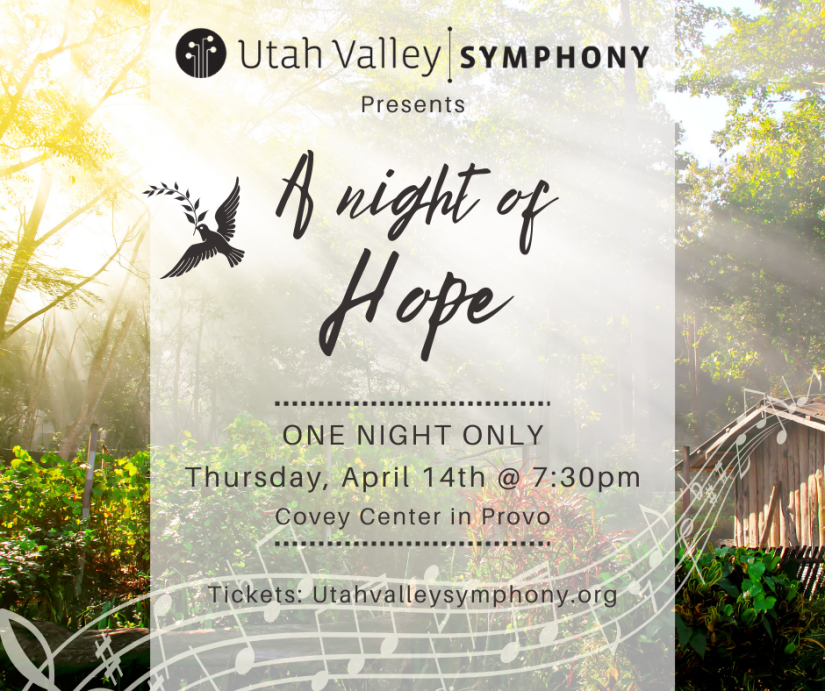
Our spring symphony concert was originally going to be fun, movie music and spy themed music. However, after the conflict broke out in the Ukraine, they decided to shift the focus of the concert. A night of hope and peace seemed more appropriate right now as the world is in commotion.
Music has such a divine ability to bring peace to the soul quicker than words and in a deeper way. Music is the universal language and no barriers exist from country to country. Many times in my life I’ve felt the hope that only music can bring.
We will perform the Haydn Mass, Fanfare for the Common Man by Copland (even though it doesn’t have a flute part, it remains one of my all time favorites), Enigma Variations by Elgar, Intermezzo from Cavalleria rustica by Mascagni (the two flute parts only play on the very last chord), and on Friday night’s concert, we will also perform Ave Verum by Mozart.
The photo above includes some details for Thursday night. You can purchase tickets here.
For tickets for the Friday night concert, held at Utah Valley University, click here.
I hope that wherever you are in the world, you will let music fill your heart with hope and peace and seek to find the good in humanity.
Last week my friend, and former flute student, sent me this article and gave me permission to share it here. Thanks, Danette.
Used with permission from Danette Landon
“Most successful people know you can’t rely on luck and achieve results that are both predictable and reliable. It may be possible to have an occasional victory, but most successful endeavors require more than luck and superstition.
But what role does luck play?
A 2010 study published in the journal Psychological Science found that superstitions are typically seen as inconsequential creations of irrational minds. Nevertheless, many people do things like search for four-leaf clovers, hang horseshoes or avoid walking under ladders.
Present research reveals performance benefits of superstitions are realized from underlying psychological mechanisms.
Experiments show it is not a magical power that improves results, but good old-fashioned beliefs and behavior that combine to create changes in perceived self-efficacy, confidence, and increased task persistence. So, the next time you are looking for a little extra help, remember to believe in yourself and keep going!”
Danette Landon
Ross & Danette/Landon Team Realtypath Home & Family 801-577-8605