I’m playing with the NHCO tonight and tomorrow night. The flutes don’t play on very many of the pieces and it’s a smaller chamber orchestra, but it should still be fun. The soloists are amazing. This is the 5th year running for the Nebo Holiday Chorus & Orchestra Messiah production.
The Utah Valley Symphony presents an “Out of This Universe” concert Thursday and Friday, October 19th and 20th, 7:30 pm at the Covey Center in Provo.
Guest conductor Kory Katseanes directs an experience that brings the cosmos to life at this epic concert! Holst’s “The Planets” will transport you to celestial realms, followed by a thrilling Williams “Star Wars Suite” that’ll ignite your inner Jedi.
Prepare for a musical journey like no other! Plus, come early for the chance to take pictures with your favorite Star Wars character!
Orchestra members will be in costume, and we absolutely encourage you to join the intergalactic fun by dressing up too!
The Planets by Holst requires extra players to create an even bigger, majestic sound. The Planets is definitely on my Top 10 list of favorite pieces to play with the symphony!!! It has some amazing flute parts (there are 4 flute players – our own flute choir within the symphony) and the Star Wars Suite features some exciting flute parts and some beautiful flute solos as well.
Get your tickets early!! Please visit www.utahvalleysymphony.org for tickets and more information about season tickets.
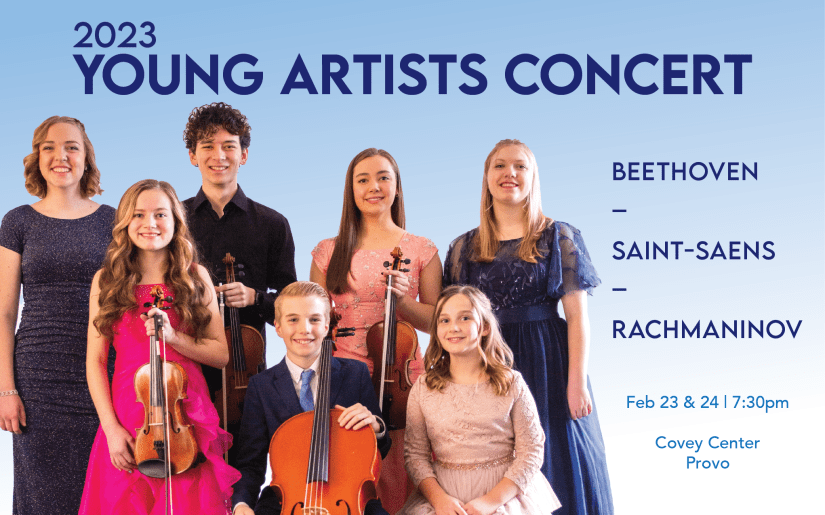
Brilliant young artists will join the Utah Valley Symphony in concert Wed & Thurs, Feb 23rd & 24th. The soloists will perform works by Rachmaninoff, Handel, Saint- Saëns, Beethoven, and more.
The symphony will also perform Dvořák’s Carnival Overture and The Moldau by Smetena. Great flute parts!
Here we are again, another Halloween. We are surrounded by ghosts, skeletons, creepy pumpkins, headstones and scary movies. A strange holiday, but I like the happy side of Halloween: happy pumpkins, happy ghosts, happy costumes and happy decorations.
I’m sure everyone has been afraid of something at some point in your life. How do you define fear?
What are common types of fear? Fear of failure. Fear of getting hurt. Fear of spiders or all types of phobias. Fear of being late. Fear of judgement. Fear of the unknown. Fear of unmet expectations. This list could go on and on. As a flute teacher, I frequently see the fear of performing or the fear of making a mistake in students. But what exactly are they afraid of?
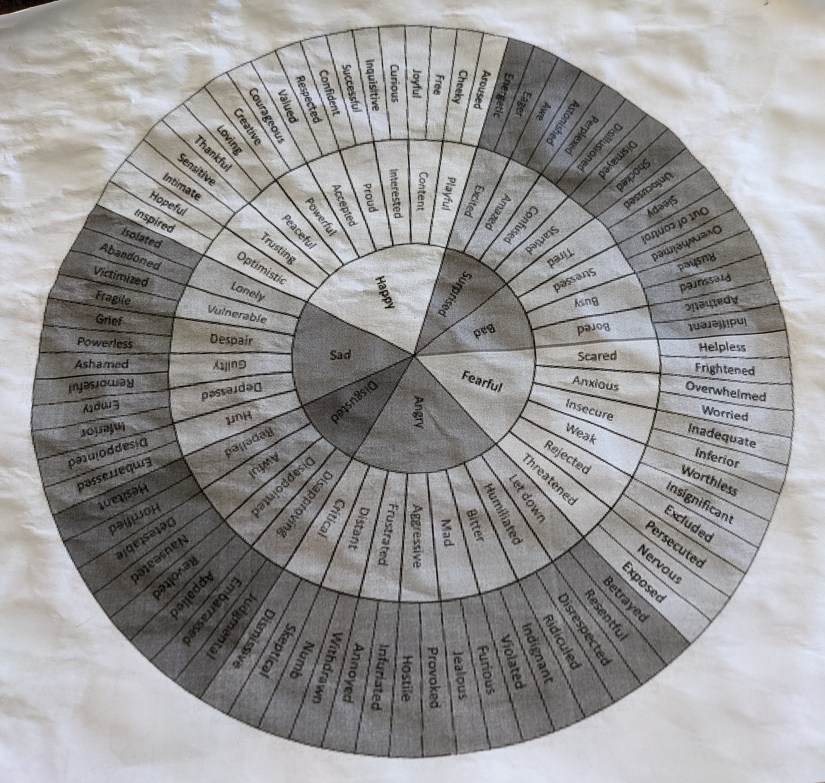
Psychologists and therapists use something called The Feelings Wheel to help identify the root causes of emotions.
This is my copy that has been on my fridge for a while. Here is also a link to another Feelings Wheel developed by Dr. Gloria Willcox of The Gottman Institute.
According to this chart, fearful is a word that can include scared (helpless or frightened), anxious (overwhelmed or worried), insecure (inadequate or inferior), weak (worthless or insignificant) rejected (excluded or persecuted), and threatened (nervous or exposed). Dr. Willcox’s wheel also includes bewildered, confused, discouraged, submissive, foolish and embarrassed. Other wheels also use the words vulnerable, suspicious, apprehensive, concern, worried, susceptible, and terrified.
When I think about conquering fear, the words I just listed above are much more descriptive than just the word fear itself. Once you’ve identified the root of your fear, then it makes it easier to address the thinking process. I am not a trained therapist nor do I claim to be by any means. I just know that thinking through things and adjusting thought processes contributes immensely to emotional health.
Many of these feelings listed on the chart are normal. But when these emotions paralyze you, it’s time to address them and turn them around for your benefit. I encourage you to seek professional help, if necessary.
I love this quote from the movie Princess Diaries:
Courage is not the absence of fear, but rather the judgment that something is more important than fear. The brave may not live forever, but the cautious do not live at all.
Princess Diaries
Recognize that fear exists. What you decide to do about it is the important part. Acknowledge it. Face it. Conquer it everyday.
Also, visit my post from October 29, 2020 called Don’t Be Scared, for specific details on how to address performance anxiety as a flute player or musician.
Dynamics = playing loud or soft, or somewhere in between
Intonation = the art of playing in tune
Changing the volume on a radio or headphones requires changing a button. It takes very little effort to make this change. However, as a flute player, it’s not that simple. Anyone can play one volume. Learning to play various volumes adds to the musicality of your phrases.
Musicality = expressing feeling through the music by adding dynamics and stylistic characteristics. This makes music more interesting to listen to and to play instead of sounding monotone.
Phrase = a musical sentence. This can be any length, but frequently is 2 to 4 or sometimes 8 measures long.
There are many articles and books written on the subject of flute dynamics and more specifically, intonation. My intent here is to do a basic, simple summary for flute players and give you a place to get started. Here is a chart to help explain it.
Dynamic level
pp
ff
pp
Lip shape
oo
Ah
oo
Size of lip opening (embouchure)
smaller
bigger
smaller
Angle of the air stream
higher
lower
higher
Amount of air
less
more
less
Abdominal support
always
always
always
Elements affecting dynamic range
The column on the left describes the elements that affect your dynamic range. The columns on the right describe how those elements should change when you are playing the different dynamic ranges as listed at the top of the chart.
Just as these colors gradually shift from one to another, you must progressively adjust your lips, opening, angle and amount of air. Sometimes the smallest modification can create a big difference in your flute sound.
First, practice moving from the pp column to the ff column. Then start at the ff range and gradually move to the pp range. Practice this on random notes in the low, middle, and high registers. Try to create the widest extremes that you can. For example, play even softer than you think you can and try playing even louder than you think you can. Then, after you are feeling comfortable with this, try going from pp-ff-pp all in one breath. Do this exercise on random notes in different registers as well.



 Lynette Lewis Flute Studio