
Flute

National Flute Association Convention

“Beyond Borders” was the Convention Theme for 2023

I just returned from Phoenix, Arizona, my hometown, where I attended the 51st Annual National Flute Association (NFA) Convention. It was inspiring!! I kept thinking to myself, “I can’t wait to go home and practice.” It was fun to see old flute friends, hear extremely talented performers, talk with other teachers, and attend masterclasses and recitals all day and all night long.

I also came away with so many fantastic ideas to incorporate into my teaching studio. I took pages and pages of notes. For today, here are 10 gems I want to share, not in any particular order:

  • Where do your head and your heart combine?
  • Stand tall so you don’t collapse the air space.
  • Once you start living the music, accept it and there won’t be time or space to be anxious.
  • Be in the moment.
  • Always strive for a good tone.
  • Don’t second guess yourself.
  • Have the conviction that you are sharing the best you have at that moment in time on the stage.
  • Create something better than the day before.
  • Silence is critical.
  • Never compromise the feeling of the music.
Flute

Dynamics and Intonation, part 2

In my most recent blog post I addressed Dynamics. Here’s the other half of the equation – Intonation, which is learning to play in tune. This is intended for the flute student that is new to learning about intonation.

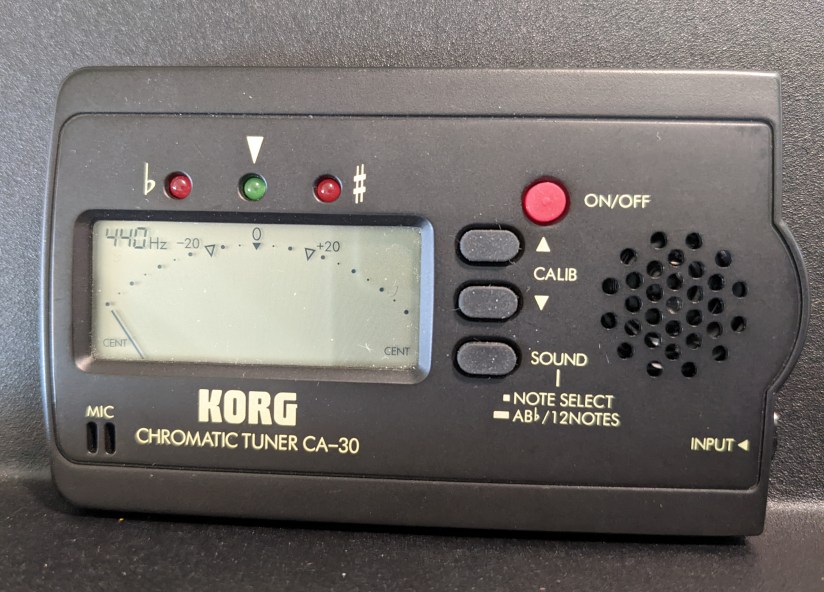
Start by getting a tuner or tuner app. Turn it on and calibrate it to A=440. Tune your middle and lower register As and middle D. The goal is to have the needle vertical so the green light is on. Remember to play with a consistent air stream for each note. If your air is different, for example, playing soft for one tuning note and loud for another, you won’t match the intonation with the different octaves.

If you are sharp, meaning it is leaning towards the right, then pull your headjoint out a little. Here’s a way to remember. If you step on a tack – or a pin, it is sharp and you want to pull it out. (Do people even use thumb tacks anymore??) If you are flat, meaning it is leaning towards the left, then it’s the opposite, push your headjoint in slightly.

Next, practice harmonics. Finger a note in the low register, then overblow to get different pitches. You do this by changing the lip opening, air speed, and angle of the air.

Try this exercise. Play low G, middle G, then overblow to get the pitch high D. Then switch to the “true” high D fingering and try to keep the pitch the same. Play the

Continue reading “Dynamics and Intonation, part 2”