Practicing

Dividing Practice Time

I love how this picture shows the division of the ocean, the waves, and the beach. Yet, at the same time, they also blend seamlessly into each other. This portrays perfectly how you should divide your practice time as a flute player. I call it the Law of Thirds. For example, if you practice for an hour a day, spend 20 minutes on tone and technique, 20 minutes on etudes, and 20 minutes on solos.

Tone Exercises: De la Sonorite by Marcel Moyse is the universal tone exercise. In addition to that, harmonics are helpful and many other tone books such as the Trevor Wye books and other exercises are available. In fact, you can even make up your own exercises. The important thing is that you spend time playing slowly and take the time to listen. Save the fast finger work for later. I once heard that Moyse said he never played above a B before breakfast.

Technique: Piano players have Hanon exercises. Flute players have the Taffanel and Gaubert 17 Daily Exercises for Flute which is a vast collection of scales, 3rds, 6ths, and arpeggios. It is essential to any flute players development to spend a lot of time with these exercises. One of my teachers shared a true story of a friend of his who was part of a professional symphony orchestra. While staying in a hotel one night while the orchestra was on tour, what do you think the principal oboe player was practicing? You guessed it…scales. It is one of the foundations of music and critical for any musician at any level.

Etudes: I have a file cabinet drawer (technically, more than one drawer) full of various etude and method books complete with Altes, Andersen, Berbiguier, Casterade, Gariboldi, Jean-Jean, Kohler, and more. Students that spend diligent time doing etudes have better technique and learn how to phrase. Etudes help improve finger coordination which strengthens technique, provides opportunities to expand your breath control and vibrato, teach you how to play with dynamics, help strengthen tonguing, and improves sight reading abilities. They are another critical foundation block for any flute player at any level.

Solos: If you are preparing for an audition, festival, or recital, you already have your work cut out for you. If not, it’s nice to have two solos to be working on. Perhaps contrasting in style, such as one slow and one fast or one in the baroque style and one in the romantic style. The goal is to have a well rounded feel for different types of solos out there. I’ll be eternally grateful for my teachers, especially Dr. Ted Wight, who did an incredible job of introducing me to the world of flute repertoire!

If you are not currently studying with a private flute teacher, you can still explore solos. A simple way is to visit www.flutetunes.com where they post “A New Score a Day” and you have access to free flute music in a variety of styles. They also have links to scales and arpeggios. With access to the internet these days, you can easily find free music sites and others to purchase more music than you could ever imagine.

I fully believe that incorporating tone, technique, etudes, and solos equally into your practice time create the balance you need to become a strong, well rounded flute player. If you only play solos, you are missing out on a lot and I guarantee that you will be lacking in other areas. I challenge you to make it a habit to divide your practice time using all of these critical elements.

Practicing

Time Flies

It’s already February! Where did January go? Does anyone else besides me feel like time flies? I had a riddle book growing up that I loved to read over and over. Here’s a riddle for you from that book.

HOW DO YOU MAKE TIME FLY?

The answer will be at the end of this post… Keep reading.

With the new year beginning (last month), did you set any new goals? As a music teacher, the new year is a great time to encourage students (again) to increase their practicing efforts.

“Did you practice?” That’s what every kid wants to hear from their parent or teacher, right? Haha.

First of all, your teacher can tell if you practiced or not, you don’t really have to say anything. They’ll already know if you practiced. Trust me, they’ll know.

Do you ever think to yourself, “Oh, I have all week to practice. I’ll go do something else right now.” Then all of the sudden you realize that your lesson is TOMORROW right after school and you haven’t practiced at all! Panic! Don’t tell anyone, but I’ll admit – I did that when I first started taking flute lessons. However, over time I learned to love the flute more and more and practicing became fun instead of a chore. Now when I sit down to practice, I enjoy it so much that when I finish and look at the clock, I didn’t realize how much time had passed. That’s when practicing is fun.

You don’t feel that way, yet? I understand. When it comes to practicing, follow the Nike slogan. Just Do It. Half the battle is simply getting your flute out of the case or sitting down at the piano and getting your books out. Don’t argue with your parent for 30 minutes, just go practice for 30 minutes instead.

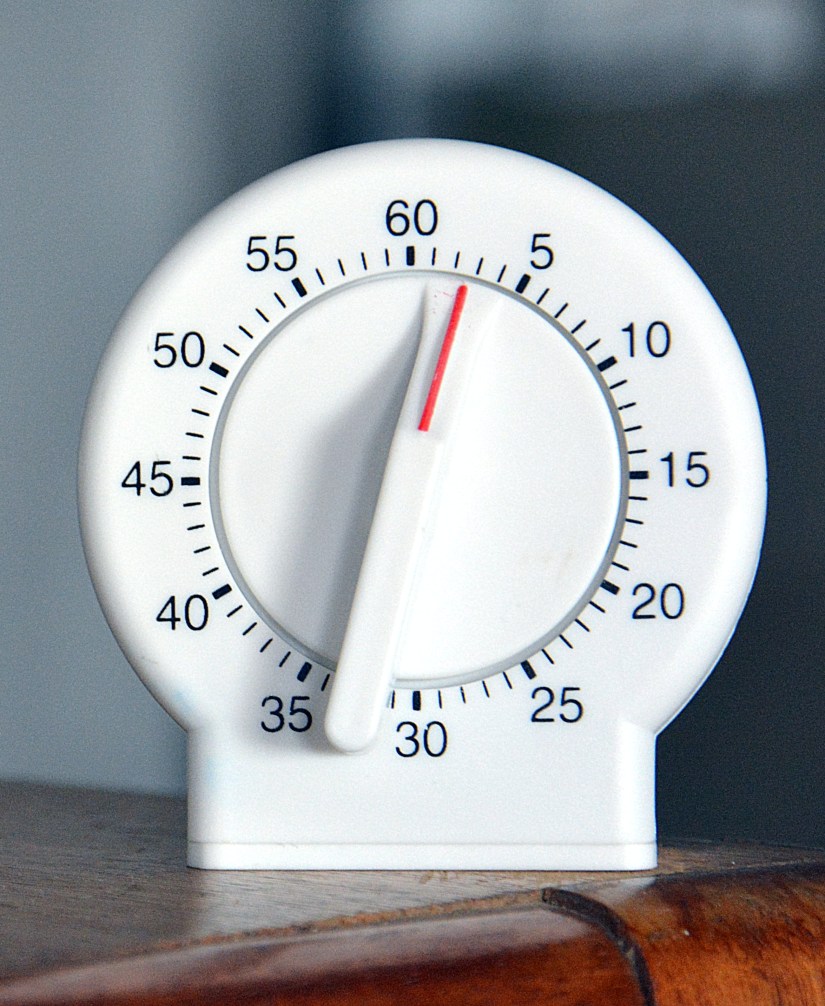
When my children were younger, they each had their own kitchen timer to keep track of their 30 minutes of practicing. Kids didn’t have smartphones back then. The timers helped them see how much time had passed and how much time they had left.

A word to the wise about setting practice timers. Be careful how you do it. Someone shared a story of how their daughter wanted to go play with firends, but knew she had to complete her practicing first.

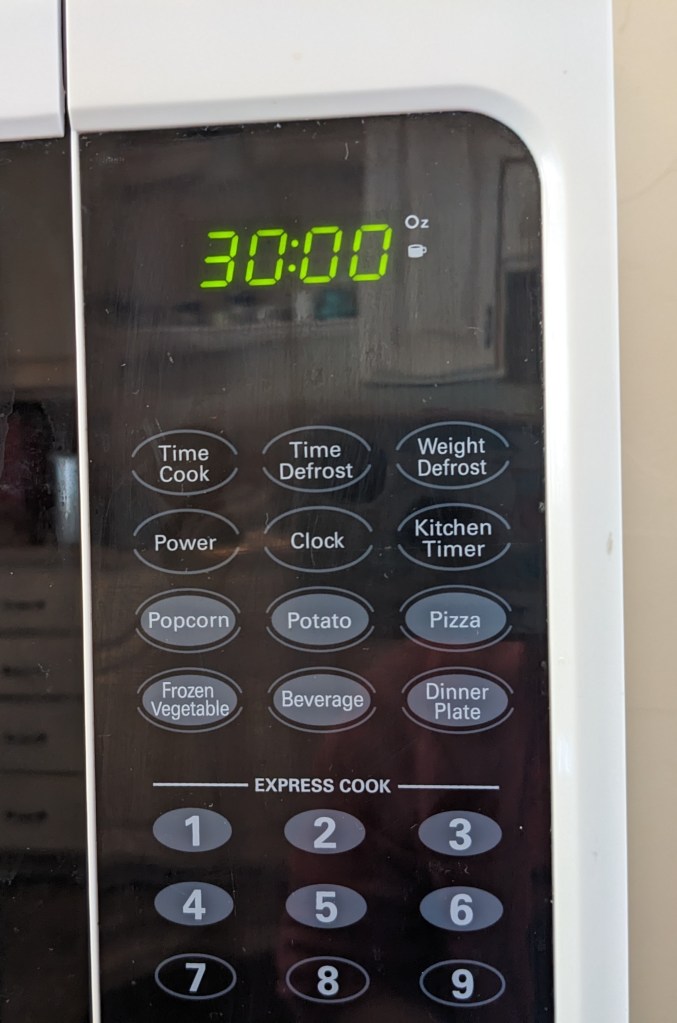
She thought she set the microwave timer to 30 minutes and went to go practice the piano. But, she didn’t set the timer button, she pressed the cook button instead!! After practicing about 20 minutes she went into the kitchen to see how much time was left. What did she find? The microwave was on fire!!

In her dad’s words (Kelly R. Johnson), this is what happened next, “She then ran into the backyard where I was doing yard work, yelling that the house was on fire. I quickly ran into the house, and indeed, I found the microwave oven in flames. In an effort to save our home from burning, I reached behind the microwave, unplugged it, and used the power cord to lift the burning microwave off of the counter. Hoping to be the hero and to save the day as well as our home, I swung the flaming microwave in circles with the power cord to keep it away from my body, got to the backyard, and with another swinging motion flung the microwave out onto the lawn. There we were able to extinguish the fiery flames with a hose.”

Now, this is probably an extreme story of a practice timer gone awry. But if it helps, I encourage you to set a timer.

The more you practice, the sooner you will improve. It’s that simple. The more you practice, the easier it gets to be motiviated to do it.

The riddle I shared? HOW DO YOU MAKE TIME FLY? Answer: THROW YOUR CLOCK OUT THE WINDOW. Well, I obviously wouldn’t recommend throwing your flute out the window, and hopefully, you won’t have a need to throw a burning microwave out the door. My point is, that the more you practice and get into a regular routine of practicing, the easier it will become and you’ll find that time flies when you are having fun.

Practicing

Michel Debost’s Scale Game

I took lessons from Michel Debost for 6 incredible months. I was introduced to his scale game several years before studying with him privately in Oberlin, Ohio. This quickly became my favorite way to practice the Taffanel-Gaubert Daily Exercise No. 4 every day. I would practice the first 30 on a daily basis, then on random days I’d play #31-60. Find what works best for you. This is from the book called 17 Daily Exercises for Flute which is a section taken from the Complete Method for Flute, both published by Alphonse Leduc.

Click on the following links for a PDF of what he is explaining. Enjoy!!

Rotation chart and page 1 and page 2 of notated music examples

This article by Frances Lapp Averitt is a reprint from the March 1988 issue of the Flute Talk magazine.

The Gamme [Scale]-Game of Michel Debost

The scale format devised by Debost consists of playing twice through all keys of the Taffanel-Gau­bert Daily Exercises, No. 4 using 60 articulations and rhythms. Though time-consuming, Debost’s scale exercises have great value. With diligent practice the flutist will achieve not only agility, but improve ar­ticulation, dynamics, and more important, tone. Each day the scale practice is different because of the key-rotation through the chart. I nicknamed this intriguing format The Gamme-Game. Following is a paraphrase of Debost’s scale instructions to his stu­dents.

Scales are the essential part of daily prac­tice and must be played by memory. Begin each day with a different key. Carefully define the transitions between scales by slurring them. Debost says that this transition is very im­portant to the musical feeling. “This is the time to rest, relax, and relieve tension by listening to and loving your tone. Taste every note like you are tasting wine.”

Always play the scales rhythmically. The pri­mary concern should not only be speed, but also cleanness and evenness of execution. Breathe after the first note of a group of eight. To breathe in scales with repeated notes, leave out notes when necessary so that the ongoing rhythm remains unaffected.

The scales of C major, C minor, D flat major, D# minor, D major and D minor are to be repeated one octave higher. Repeat the upper octave key right after the lower octave.
The chart gives 60 articulations and rhythms. Assign one scale at minimum to each example and persist with those that are most difficult to handle. These 60 combinations represent two complete play-throughs of the scales. The 12 ma­jor keys and 12 minor keys with 6 repetitions one octave higher give 30 patterns, multiplied by 2 to make a total of 60 different scales. This is the minimum to be practiced each day; the rou­tine takes about 45 minutes.

Nothing less than perfection is acceptable for scales: strive for evenness in all registers and tempos, attacks without cracking the tone, and control at all dynamic levels.

Key Rotation

  • Day One: K1 [meaning the Key-Chain] on C1 [meaning the Chart]; K2 on C2; K3 on C3, etc.
  • Day Two: (move forward one key): K2 on C1; K3 on C2; K4 on C3, etc
  • Day Three: (more forward another key): K3 on C1; K4 on C2; K5 on C3, etc.
  • Each day thereafter: move forward one more key for C1.

Suggestion: to keep track of your place in the key-chain, clip a paper clip over the key that will begin the next day.

Carefully define the transitions between the scales by always slurring them with a singing tone at a moderate or slow tempo. Assign only one scale to each example. Strive for evenness of tone and dynamic control.

-Michel Debost