Blog

Practicing

Michel Debost’s Scale Game

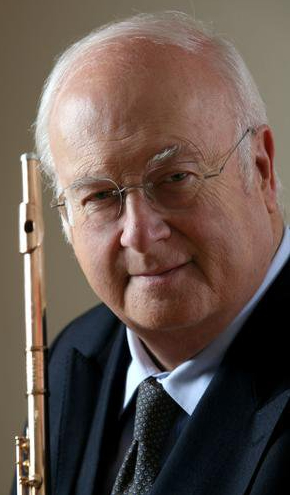
I took lessons from Michel Debost for 6 incredible months. I was introduced to his scale game several years before studying with him privately in Oberlin, Ohio. This quickly became my favorite way to practice the Taffanel-Gaubert Daily Exercise No. 4 every day. I would practice the first 30 on a daily basis, then on random days I’d play #31-60. Find what works best for you. This is from the book called 17 Daily Exercises for Flute which is a section taken from the Complete Method for Flute, both published by Alphonse Leduc.
Click on the following links for a PDF of what he is explaining. Enjoy!!

Rotation chart and page 1 and page 2 of notated music examples

This article by Frances Lapp Averitt is a reprint from the March 1988 issue of the Flute Talk magazine.

The Gamme [Scale]-Game of Michel Debost

The scale format devised by Debost consists of playing twice through all keys of the Taffanel-Gau­bert Daily Exercises, No. 4 using 60 articulations and rhythms. Though time-consuming, Debost’s scale exercises have great value. With diligent practice the flutist will achieve not only agility, but improve ar­ticulation, dynamics, and more important, tone. Each day the scale practice is different because of the key-rotation through the chart. I nicknamed this intriguing format The Gamme-Game. Following is a paraphrase of Debost’s scale instructions to his stu­dents.

Scales are the essential part of daily prac­tice and must be played by memory. Begin each day with a different key. Carefully define the transitions between scales by slurring them. Debost says that this transition is very im­portant to the musical feeling. “This is the time to rest, relax, and relieve tension by listening to and loving your tone. Taste every note like you are tasting wine.”

Always play the scales rhythmically. The pri­mary concern should not only be speed, but also cleanness and evenness of execution. Breathe after the first note of a group of eight. To breathe in scales with repeated notes, leave out notes when necessary so that the ongoing rhythm remains unaffected.

The scales of C major, C minor, D flat major, D# minor, D major and D minor are to be repeated one octave higher. Repeat the upper octave key right after the lower octave.
The chart gives 60 articulations and rhythms. Assign one scale at minimum to each example and persist with those that are most difficult to handle. These 60 combinations represent two complete play-throughs of the scales. The 12 ma­jor keys and 12 minor keys with 6 repetitions one octave higher give 30 patterns, multiplied by 2 to make a total of 60 different scales. This is the minimum to be practiced each day; the rou­tine takes about 45 minutes.

Nothing less than perfection is acceptable for scales: strive for evenness in all registers and tempos, attacks without cracking the tone, and control at all dynamic levels.

Key Rotation

  • Day One: K1 [meaning the Key-Chain] on C1 [meaning the Chart]; K2 on C2; K3 on C3, etc.
  • Day Two: (move forward one key): K2 on C1; K3 on C2; K4 on C3, etc
  • Day Three: (more forward another key): K3 on C1; K4 on C2; K5 on C3, etc.
  • Each day thereafter: move forward one more key for C1.

Suggestion: to keep track of your place in the key-chain, clip a paper clip over the key that will begin the next day.

Carefully define the transitions between the scales by always slurring them with a singing tone at a moderate or slow tempo. Assign only one scale to each example. Strive for evenness of tone and dynamic control.

-Michel Debost
Flute

Fun with Music at Any Age

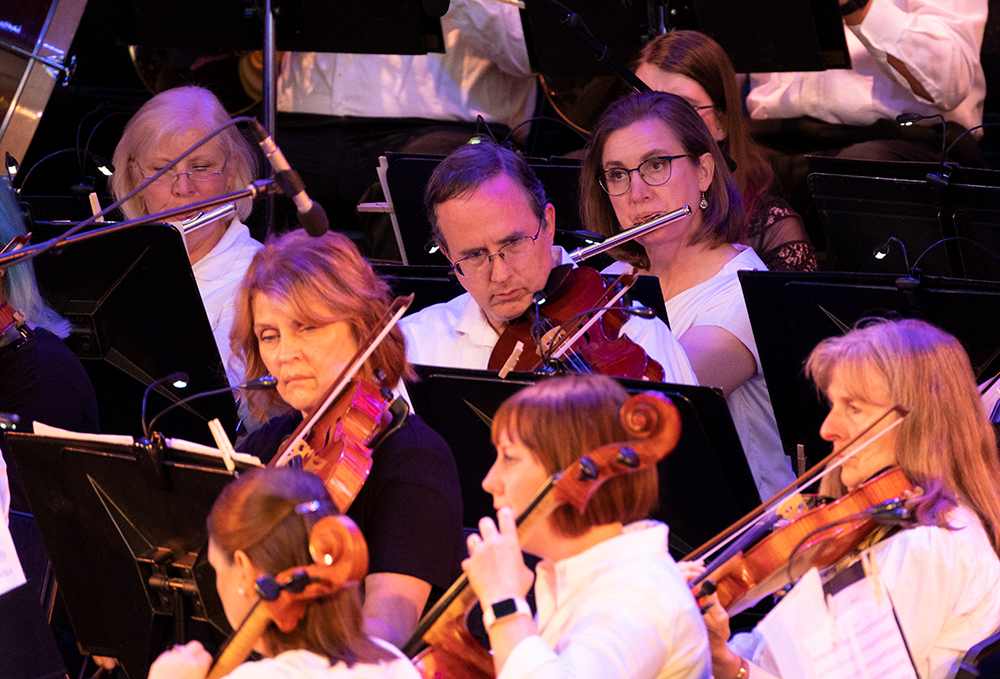
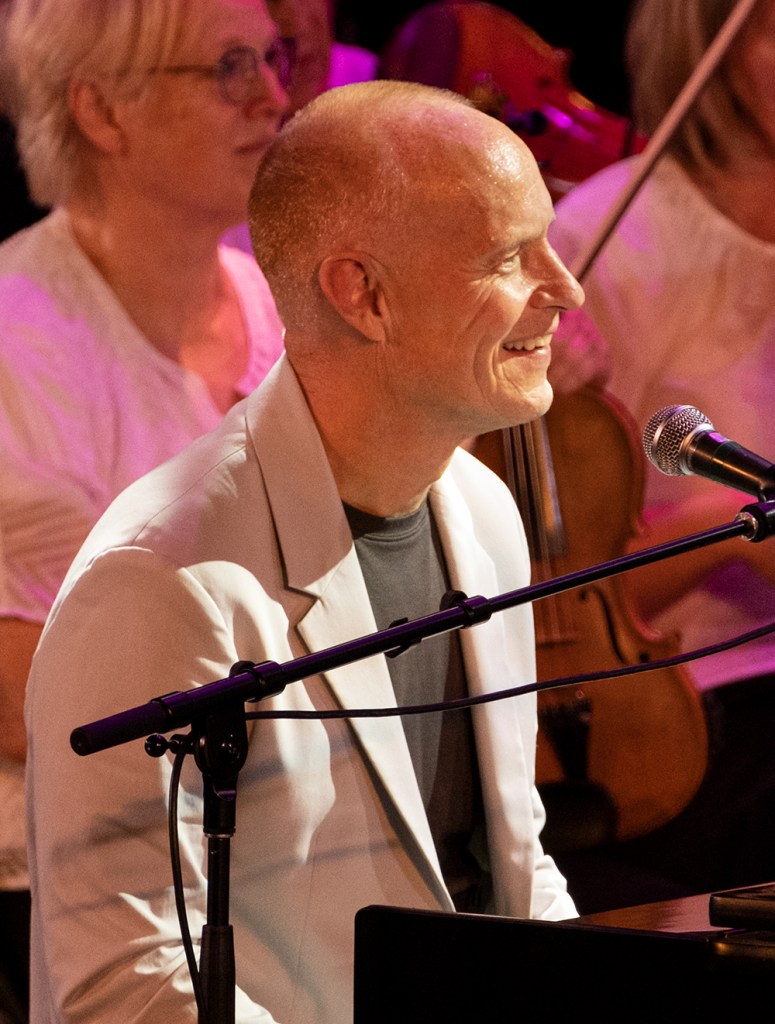
Last Night we (the Utah Valley Symphony) had our concert with Jon Schmidt of The Piano Guys at the Scera Outdoor Theatre. Talk about FUN!!! It was great.

First, I have a story to share, even though it’s not about one of my flute students. Earlier yesterday afternoon I was teaching one of my younger piano students about how any finger could play middle C; it isn’t always played with your thumb. I told him that you could even play it with your toe or your nose. It didn’t matter; that key would still be C. So he immediately tried to play the piano with his toe and his nose, of course. Then while he played the 8 measure Middle C March from Faber’s Primer Level of Piano Adventures, he tried to use his toe to play the last measure.

I often do silly things like this with with my younger students. But last night I realized that I also need to have more fun with my older students. How does this relate to Jon Schmidt and our concert? Read on.

Continue reading “Fun with Music at Any Age”
Utah Valley Symphony

Utah Valley Symphony joins Jon Schmidt

August 22nd, 2022

The Utah Valley Symphony will join musical forces with the talented Jon Schmidt of The Piano Guys. They will perform Monday, August 22nd, 2022 at 8:00 pm at the Scera Outdoor Theatre, 600 S 400 E, Orem, Utah. Gates open at 6:30 p.m. Click here for tickets.

This concert will include varied favorites from the Beethoven Symphony No. 5 to Charlie Brown. With Jon Schmidt’s dynamic personality and musical talent combined with the excellent musicians of the Utah Valley Symphony, this concert is sure to please all who attend. Get your tickets today.

Flute

Adult Flute Students

In my over 30 years of teaching experience, I have almost always had at least one adult student in my studio. While I love teaching all ages, I especially love teaching adults because I know that they are doing it because they really want to. An adult student is anyone over the age of 18 in my book, not just someone who is retired. I’ve had beginner, intermediate, and advanced adult flute students. I welcome any level and any age of flute player to my studio.

Please refer to my blog post from June 29th, 2022 entitled What to Expect from Flute Lessons for more specifics for your first lesson such as what to bring and what to play.

First of all, you should know that I take you (adults) just as seriously as younger students. Since you are an adult, I expect you to be more proactive in your practicing and know that you understand your limits. However, at the same time, I will strive to push you to excel in new areas and want you to be open and honest with me about your flute playing goals and expectations.

I’m more than happy to work on songs you are interested in learning. Know that I will still expect you to work on tone, technique exercises and etudes, in addition to your solos.

The most common issues you will probably bring with you are bad flute habits that unfortunately, you’ve had for a long time. My goal is to identify and adjust or change those habits. I recognize that that can be frustrating, but IT IS possible to change old habits for the better. It takes patience and persistence, but over time, you’ll be able to make those adjustments which will improve your flute playing.

Occasionally adult students don’t want to play in front of the younger students and are hesitant or refuse to play for masterclasses, recitals, or festivals. I will encourage you to participate, but will also respect your wishes. Most of the time, however, I find that adult students seek performance opportunities and recognize the benefit they can gain from any performing experience.

I know what it’s like to be juggling family, work, hobbies, community, and church responsibilities. I think it’s fabulous to continue to develop your talents at any age. Music is magnificent, magical, marvelous, and a meaningful part of life!

Flute

What to Expect from Flute Lessons

Your mom (just because that’s who almost always contacts me – thanks moms) signed you up for flute lessons from a stranger. Was it her idea or your idea? In any case, now what? Are you excited? Are you nervous? What will it be like? Will he or she be nice? What if you make a mistake?

These are all natural questions and natural feelings you might have before attending your first lesson. Maybe you are a beginner. Maybe you’ve played for a few years. Maybe you played when you were younger and now, as an adult, you finally decide you want some private instruction that you never had in your youth. Coming to your first lesson can be apprehensive. Of course, all teachers are different, so I’ll share what you can expect from me at your first flute lesson.

Once we have decided on a day and time and length for your lesson, I’ll give you some detailed instructions.

For NEW beginners: Make sure you have a good flute in proper working condition. I’m happy to help with this process and have flutes for sale and also have connections to resources for good beginner flutes. No matter where you got your flute, and especially if it’s your aunt’s old flute, or a friend’s old flute, I’ll want to play it and make sure it works well. Having a flute in good condition is critical to getting off to a good start.

All you need to bring is a flute and I’ll provide the rest. At your first lesson, we’ll do some fun breathing and blowing games and get you started with skills to help produce a great flute sound. I require beginners to purchase a Pneumo Pro device, which I have available. You will also need a method book, a solo book, and flashcards if you haven’t previously had piano lessons. I purchase these for you and ask for reimbursement. This way, I know that you have the correct materials for your lessons.

For those who have some experience: Whether you’ve played for a few years or 20 years ago in your youth, when you come to your first lesson, I want to hear you play something. Prepare to play something slow and something fast. Even if it’s just a folk song, a band song, a hymn, a song you taught yourself, anything. Review what scales you know and be prepared to play them for me. If you don’t know any or very many, don’t worry; scales will soon become your best friends. Bring any flute music that you have.

After I’ve heard you play, I’ll point out the things I feel you are doing well and address at least one issue for you to improve your tone and/or technique. I’ll give you a practice journal to keep track of your lesson assignments and it has a place for you to record your practice time each week. If you have music that we can utilize for lessons, we’ll start by using that first. If you only have band method books, it will be necessary to purchase a different method book. I’ll also assign a solo book and a duet book. As stated above, I purchase these for you and ask for reimbursement. Like the beginners, I will also check your flute by playing it and make sure it is in good working condition. I am able to fix some small issues, but sometimes it will be necessary for you to take your flute to a service technician for repairs. I’ll give you recommendations for that.

FOR EVERYONE: Be yourself. Don’t worry about the things you don’t know. That’s why you are taking lessons, so you can learn and improve, right?

Everything I do during your flute lesson is to strive to help you become a better flute player, a better musician, and a better person.